Healthy trees are essential to a safe and beautiful landscape, but tree fungus can quietly compromise their strength over time. Many fungal infections begin out of sight, slowly affecting roots, bark, or internal wood before symptoms become obvious. Understanding the most common types of tree fungus helps property owners recognize problems early and take action before serious damage occurs. In many cases, a professional evaluation can make the difference between saving a tree and needing its removal. Tree Docs helps homeowners identify and manage tree fungus issues before they become hazardous.
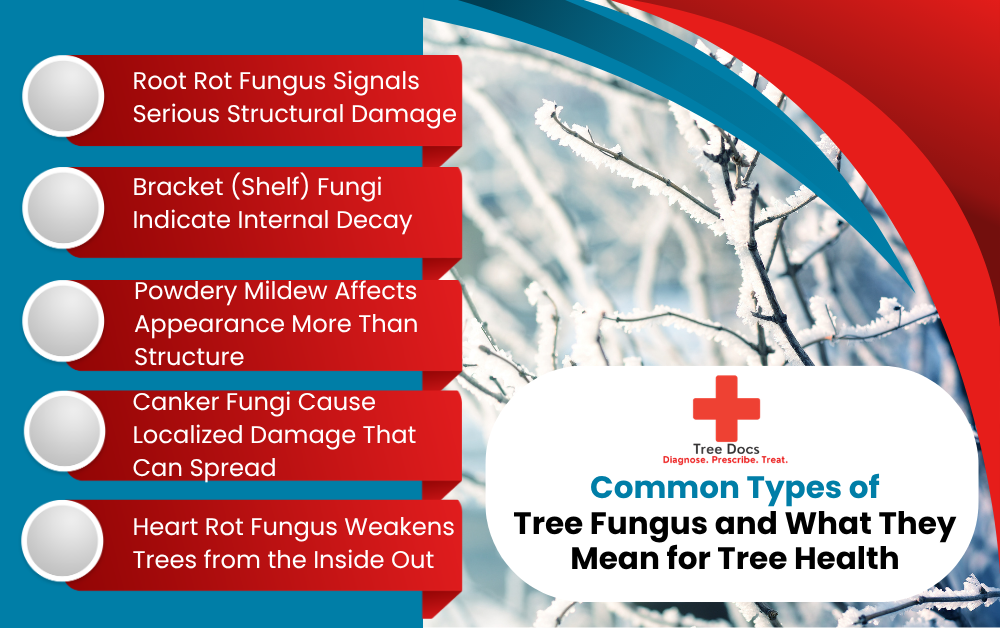
Root Rot Fungus Signals Serious Structural Damage
Hidden Damage Below the Surface
Root rot is one of the most dangerous forms of tree fungus because it attacks where you cannot easily see it. It begins in the root system, slowly breaking down the tissue that anchors and nourishes the tree. As the infection spreads, the tree becomes less stable and more vulnerable to environmental stress. Many homeowners do not realize there is a problem until a visible decline begins. By that point, significant underground damage has already occurred.
Warning Signs Above Ground
Although root rot starts below the soil, it eventually shows symptoms in the tree’s appearance. You may notice:
- Wilting or drooping leaves, even with adequate water
- Thinning canopy or sparse foliage
- Slower-than-normal seasonal growth
- Sudden leaning or shifting in the soil
- Mushrooms or fungal growth near the base
These signs often indicate that the root system is no longer functioning properly. Once these symptoms appear, the structural integrity of the tree may already be at risk.
Conditions That Encourage Root Rot
Root rot thrives in environments where moisture is excessive and drainage is poor. Compacted soil and overwatering can accelerate the spread of this tree fungus. Trees planted too deeply are also more susceptible to infection. Preventing these conditions is key to reducing risk. Regular inspection can help catch early signs before the damage becomes severe.
- Poor drainage areas
- Overwatered landscapes
- Heavy clay soil
- Damage from construction or soil compaction
- Trees planted too deeply
Bracket (Shelf) Fungi Indicate Internal Decay
Visible Growth on the Trunk
Bracket fungi are one of the most recognizable forms of tree fungus, often appearing as shelf-like structures on trunks or large branches. While they may look harmless or even interesting, their presence usually signals internal decay. These fungi feed on the wood inside the tree, weakening it from within. The visible growth is only a small part of the problem happening internally. Their appearance should always be taken seriously.
What Internal Decay Means for Trees
Once bracket fungi appear, it typically means the tree has already suffered significant internal damage. The structural strength of the trunk or branch may be compromised even if the tree still looks healthy. This hidden decay increases the risk of sudden limb failure or complete collapse. Trees in this condition may pose safety hazards near homes or walkways. Early assessment is critical to prevent accidents.
- Weakens trunk stability
- Increases risk of branch failure
- It can spread slowly over the years
- Often indicates long-term decay
- May not be reversible once established
Risk Factors and Spread
Bracket fungi spread through spores that enter wounds or weak points in the bark. Pruning cuts, storm damage, and insect activity can all create entry points for this tree fungus. Once established, the infection can expand slowly but steadily over time. Moist environments and older trees are especially vulnerable. Proper pruning practices can help reduce the likelihood of infection.
- Open wounds in the bark
- Storm-damaged branches
- Improper pruning cuts
- High-humidity environments
- Aging or stressed trees
Powdery Mildew Affects Appearance More Than Structure
White Coating on Leaves
Powdery mildew is a common tree fungus that appears as a chalky white or gray film on leaf surfaces. It is most often found on the upper surfaces of foliage, making it easy to identify. While it does not usually attack the structural parts of the tree, it can still impact overall health. The fungus spreads quickly in warm, humid conditions. Trees in crowded or shaded areas are particularly at risk.
Impact on Tree Growth
Although powdery mildew is less destructive than other fungi, it still affects the tree’s ability to function properly. Infected leaves struggle to perform photosynthesis, which reduces energy production. Over time, this can result in weakened growth and reduced vitality. Young trees are especially sensitive to repeated infections. Even mild infestations can become problematic if left unmanaged.
- Reduced photosynthesis efficiency
- Premature leaf drop
- Stunted seasonal growth
- Increased stress on young trees
- Higher vulnerability to other diseases
Managing Powdery Mildew
- Improve air circulation around the tree
- Avoid overhead watering when possible
- Remove heavily infected leaves when practical
- The surrounding vegetation is overcrowded
- Monitor humidity levels in shaded areas
These measures can help decrease the spread of this tree fungus. In more severe cases, professional treatment may be necessary. Regular monitoring is key to preventing recurring outbreaks. Healthy growing conditions are the best defense against infection.
Canker Fungi Cause Localized Damage That Can Spread
Dead Sunken Areas on Bark
Canker fungi create visible damage in the form of sunken, dead areas on branches or trunks. These infections interrupt the flow of nutrients and water within the tree. As the disease progresses, bark may crack or peel away from the affected area. This makes the tree more vulnerable to additional infections. The damage often starts small but can expand over time.
How Cankers Affect Tree Health
Cankers weaken specific parts of the tree, often killing branches or sections of bark. In severe cases, they can girdle the trunk and kill the entire tree. This type of tree fungus spreads gradually but persistently if untreated. Trees under stress are more likely to develop cankers. Early pruning and care can help limit the spread.
- Kills localized bark tissue
- Disrupts nutrient flow
- Causes branch dieback
- It can spread to the main trunk
- Increases susceptibility to pests
Common Causes of Infection
Canker fungi often enter through wounds caused by pruning, insects, or weather damage. Poor maintenance practices can significantly increase the risk. Environmental stress, such as drought, can also make trees more susceptible. Preventing injury to the bark is one of the best protective measures. Routine inspections help catch early signs before they worsen.
- Improper pruning techniques
- Insect or pest damage
- Storm injuries
- Drought stress
- Existing fungal infections
Heart Rot Fungus Weakens Trees from the Inside Out
Internal Decay Without Early Signs
Heart rot is a dangerous tree fungus because it attacks the inner core of the tree while leaving the exterior mostly intact. This makes early detection extremely difficult. The tree may appear healthy even as internal decay progresses. Over time, the heartwood becomes hollow and structurally weak. This hidden damage increases the risk of sudden failure.
Safety Risks for Mature Trees
As heart rot advances, the tree becomes significantly more prone to breaking. Strong winds or storms can cause major limbs or the entire tree to fall. This creates serious safety concerns for nearby homes, vehicles, and people. Mature trees are especially at risk because decay can go unnoticed for years. Regular inspections are essential for prevention.
- Sudden limb breakage risk
- Hollow trunk formation
- Increased storm vulnerability
- Hidden internal decay
- Potential full tree collapse
Long-Term Effects on Tree Stability
Heart rot leads to progressive weakening that cannot usually be reversed. Once the internal structure is compromised, stability declines rapidly over time. This makes it one of the most serious forms of tree fungus. Professional evaluation is often necessary to determine if removal is required. Early detection remains the best protection.
- Progressive hollowing of the trunk
- Loss of structural strength
- Increased wind failure risk
- Reduced the lifespan of the tree
- Higher safety hazards over time
Conclusion
Understanding the different types of tree fungus is important for protecting both the health and safety of your landscape. From root rot hidden underground to heart rot weakening trees from the inside, each type presents unique risks that should not be ignored. Early identification can prevent costly damage and reduce safety hazards around your property. Regular inspections and proper tree care make a significant difference in long-term tree health. Tree Docs is here to help you identify, treat, and manage tree fungus before it becomes a serious problem—contact Tree Docs today to schedule a professional tree evaluation.