Winter in Ohio brings picturesque snowfalls and a lot of road salt. From highways to driveways, deicing salt is essential for keeping walkways safe, but it’s also one of the biggest hidden threats to your landscape. Every year, thousands of trees suffer salt damage without homeowners realizing it until spring, when brown needles, bare branches, or stunted growth begin to appear.
While salt keeps drivers safe, it wreaks havoc on soil and root systems. The good news? With a little knowledge and preventive care, you can protect your trees before the next snowstorm hits. Here’s how salt damage occurs, what to look for, and how Tree Docs helps Ohio homeowners keep their trees healthy all winter long.
Understanding Salt Damage
What Is Salt Damage?
Salt damage happens when sodium and chloride ions—key components of road salt—accumulate in the soil or splash directly onto foliage. These ions interfere with a tree’s ability to absorb water, leading to dehydration and chemical burn. Over time, roots can’t take in enough moisture, causing leaves or needles to dry out, brown, and eventually die back.
Essentially, the salt designed to melt ice also “dries out” your trees. The higher the salt concentration, the more severe the damage becomes.
How Salt Reaches Your Trees
You don’t need to sprinkle salt directly onto your landscape for it to cause harm. It often travels in sneaky ways:
- Runoff: Melted snow and slush from salted roads flow downhill into lawns and root zones.
- Aerosol drift: Passing cars kick up salty mist that coats tree bark and branches.
- Soil accumulation: Repeated use over several winters increases salt levels in the soil, creating a toxic environment that lingers for years.
Why Ohio Trees Are at Risk
In Ohio, frequent snowfalls and heavy salt use make local trees particularly vulnerable. Compounding the problem, much of the region’s soil is clay-based, which drains poorly—meaning salt tends to linger longer in the root zone. Without proper intervention, this combination can slowly weaken even the hardiest trees.
Signs of Salt Damage in Trees
Recognizing the signs early is crucial for saving your trees. The symptoms of salt damage often appear subtle in winter but become much clearer once the weather warms up.
Early Warning Signs
- Browning or burnt leaf tips, especially on evergreens.
- Needles that look scorched on the side of the tree facing the road.
- Thin or patchy foliage that fails to recover in spring.
Long-Term Effects
If untreated, salt exposure can lead to:
- Weak root systems that limit nutrient uptake.
- Increased drought stress, even in wet conditions.
- Heightened vulnerability to pests and fungal infections.
Quick Identification Checklist
- Brown or yellow needles/leaves only on the roadside side of the tree.
- White, crusty residue on nearby soil or pavement.
- Delayed budding or sparse canopy in spring.
- Unexplained leaf drop following snowmelt.
Spotting these clues early allows for targeted treatment before the tree’s overall health declines.
How Tree Docs Protects Trees from Salt Damage
At Tree Docs, we specialize in diagnosing and treating salt damage in Ohio’s unique climate. Our certified arborists use science-backed methods to restore balance to your soil and strengthen trees from the ground up.
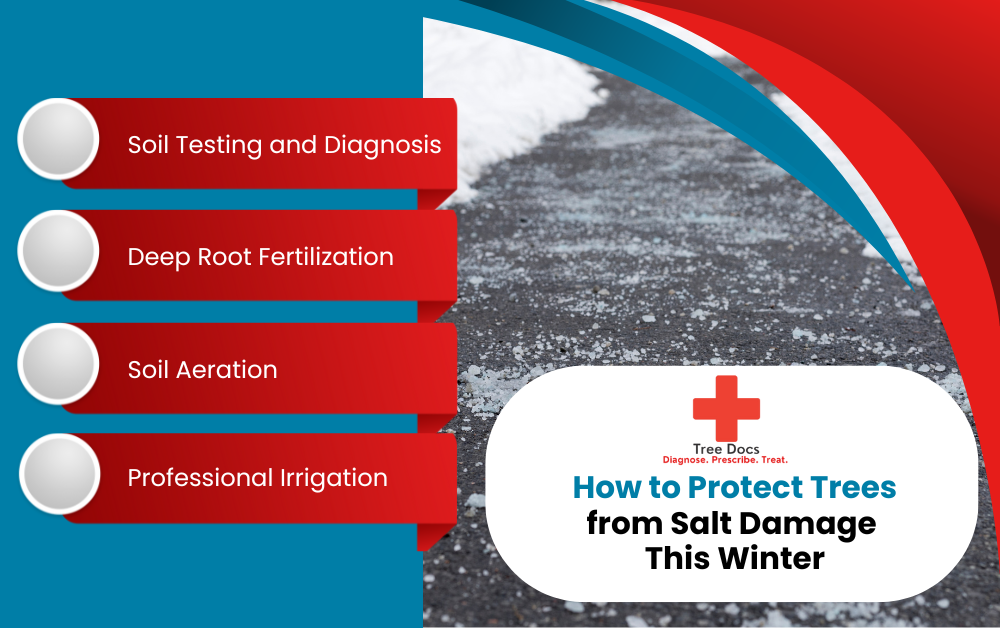
Soil Testing and Diagnosis
We start by testing the soil for sodium and chloride concentrations, pH balance, and organic matter levels. This helps determine how severe the contamination is and which treatments will be most effective.
Deep Root Fertilization
Our deep root fertilization process injects nutrients and beneficial organic compounds directly into the root zone. This not only replenishes depleted nutrients but also helps flush salt out of the soil—improving both drainage and tree vitality.
Soil Aeration
Compacted soil traps salt and suffocates roots. By aerating the soil, we create pathways for water, oxygen, and nutrients to move freely, allowing the salt to leach away more effectively.
Professional Irrigation Techniques
Proper watering is one of the simplest yet most effective ways to reduce salt damage. We develop winter irrigation plans that include controlled watering during thaw cycles to dilute salt levels and prevent root dehydration.
Prevention Tips for Homeowners
Even small changes in your winter routine can make a big difference. Here’s how to protect your trees from salt before it becomes a problem.
Create Physical Barriers
Erect burlap screens, snow fencing, or plastic sheeting between the road and your trees. These barriers block salty spray and runoff during snowstorms.
Use Salt Alternatives
Not all deicers are created equal. Consider replacing rock salt with:
- Sand: Adds traction without harming vegetation.
- Calcium magnesium acetate: Less corrosive and eco-friendly.
- Kitty litter or grit: Improves grip on walkways with no chemical residue.
Strategic Landscaping
When planting new trees, choose salt-tolerant varieties (like honey locust, ginkgo, or red maple) near driveways and roads. Keep more sensitive species, such as pines or birches, farther from salted areas.
Flush the Soil in Early Spring
Once the ground thaws, water deeply and evenly around trees to wash excess salt away from the root zone. This is one of the best post-winter recovery steps you can take.
Apply Mulch
A 2–3 inch layer of organic mulch around the base of trees helps:
- Reduce salt splash from melting snow.
- Retain soil moisture.
- Regulate soil temperature during freeze-thaw cycles.
Just remember—never pile mulch directly against the trunk. Leave a few inches of space to prevent rot.
Long-Term Strategies for Healthier Winter Landscapes
Protecting trees from salt damage isn’t a one-season task—it’s part of a larger commitment to soil and root health.
Regular Soil Maintenance
Tree Docs offers annual soil testing and fertilization programs to keep your landscape balanced. Routine adjustments prevent salt buildup and strengthen trees before the next winter.
Pruning and Monitoring
Salt-weakened branches can break easily under snow and ice. Our arborists identify and prune problem limbs early, reducing risk while promoting healthy regrowth.
Community Awareness
Encourage your neighborhood or homeowners’ association to use deicers responsibly. The collective impact of reduced salt usage can dramatically improve local soil and water quality.
Don’t Let Salt Damage Haunt Your Yard
Salt may be an inevitable part of Ohio winters, but salt damage doesn’t have to be. By understanding how it harms trees—and taking proactive steps to prevent it—you can keep your landscape strong, vibrant, and safe through every season.
At Tree Docs, our certified arborists specialize in diagnosing and treating salt-related stress before it becomes permanent damage. From soil testing to deep root fertilization, we restore balance beneath the surface so your trees stay healthy above it.
Don’t let salt take root in your landscape this winter. Call Tree Docs today or schedule a soil inspection to protect your trees before the next storm hits.