
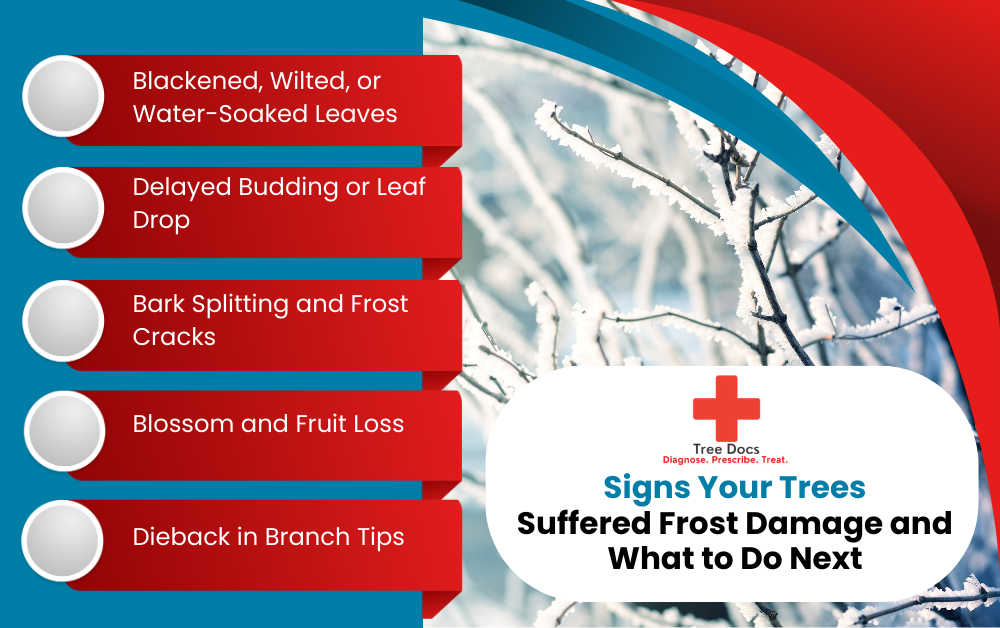
Sudden temperature drops can shock even well-established trees. While proper frost protection for trees reduces risk, unexpected cold snaps — especially late-season freezes — can still cause visible and hidden damage. Understanding the warning signs early allows you to take the right corrective steps and prevent long-term decline. Tree Docs can help you break down the most common symptoms of frost damage and explain what to do next.
Blackened, Wilted, or Water-Soaked Leaves
One of the first visible signs of frost damage is foliage that appears darkened, limp, or mushy. Leaves may look burned, water-soaked, or even translucent shortly after a freeze, as the ice crystals that form inside plant cells rupture their internal structure. When temperatures rise, the damaged tissue collapses, causing leaves to lose firmness and discolor rapidly. In some cases, the full extent of the injury isn’t immediately obvious; leaves may appear slightly wilted at first, only to blacken or curl over the next several days.
This type of damage most often affects tender new growth, which has thinner cell walls and higher moisture content, making it especially vulnerable to freezing temperatures. Young shoots, freshly emerged leaves, and spring growth are typically the first areas to show symptoms. While mature foliage may withstand brief cold exposure, delicate growth can deteriorate quickly. Monitoring these early warning signs allows you to assess the severity of the freeze and determine whether the tree is likely to recover naturally or may require corrective care.
What It Looks Like
- Leaves turning black, brown, or very dark green
- Soft, drooping, or shriveled foliage
- A water-soaked or translucent appearance
- Damage concentrated on the new or outer growth
What to Do Next
- Avoid immediate pruning after a frost event.
- Continue consistent watering if conditions are dry
- Wait for new growth to appear before trimming the damaged areas
Patience is important. Some foliage may fall off naturally, while other parts of the tree recover on their own.
Delayed Budding or Leaf Drop
If a tree fails to leaf out on schedule in spring, frost damage may be the cause, especially after a late-season freeze. When buds have already begun to swell, they become highly vulnerable, and freezing temperatures can kill the delicate tissue inside before leaves emerge. Some trees may remain bare longer than expected, while others partially leaf out, creating an uneven canopy with visible gaps. Buds may appear dry, brittle, or shriveled instead of healthy and green. Monitoring growth over several weeks — and performing a simple scratch test to check for green tissue beneath the bark — can help determine whether branches are still alive and likely to recover.
Signs to Watch For
- Buds that remain closed or dry out
- Patchy or uneven canopy development
- Premature leaf drop shortly after budding
- Sparse foliage on certain limbs
What to Do Next
- Give the tree several weeks to show signs of recovery
- Scratch-test small twigs to check for green tissue beneaththe bark
- Maintain mulch around the root zone to stabilize soil temperature
Consistent frost protection for trees, including soil insulation and moisture management, can reduce the likelihood of future bud damage.
Bark Splitting and Frost Cracks
Rapid temperature drops can cause bark to contract quickly, leading to vertical cracks in the trunk known as frost cracks. These splits often develop when daytime sun warms the bark, causing it to expand, followed by a sharp temperature decline at night that forces rapid contraction. This repeated expansion and contraction places stress on the trunk, eventually resulting in visible fissures. Frost cracks commonly appear on the south or southwest side of trees, where sunlight exposure is strongest during the winter months. While some cracks may gradually close as the tree naturally compartmentalizes the wound, the exposed inner wood can leave the tree more susceptible to insect infestations, fungal infections, and long-term structural weakness if not properly monitored.
How to Identify Frost Cracks
- Long vertical splits in the trunk
- Peeling or loose bark around the crack
- Visible inner wood exposed
- Cracks appearing after sudden freezes
What to Do Next
- Avoid applying sealants or paints to the crack
- Allow the tree to compartmentalize naturally
- Monitor for signs of insect activity or fungal growth
Preventative trunk wrapping during winter is an important frost-protection strategy for trees, particularly for young or thin-barked species.
Blossom and Fruit Loss
For fruit-bearing trees, frost damage commonly destroys blossoms before fruit has a chance to form, making late-season freezes especially devastating for homeowners and growers alike. When temperatures dip below freezing during the blooming stage, the delicate tissues inside the flowers can be damaged or killed outright. Affected blossoms may turn brown or black, appear shriveled, or drop prematurely from the tree within days of the freeze. In some cases, flowers may remain attached and look relatively normal from the outside, but internal frost injury can prevent proper pollination or fruit set. As a result, even healthy-looking blooms may fail to develop into fruit. This type of damage can dramatically reduce seasonal yield and, in severe cases, eliminate an entire harvest for the year.
Signs of Blossom Damage
- Discolored or shriveled flowers
- Blossoms dropping shortly after a freeze
- Poor fruit set following bloom
- Small fruit that fails to mature
What to Do Next
- Avoid fertilizing immediately after frost injury
- Focus on watering and general tree health
- Plan early-bloom protection strategies for next season
Using covers, proper watering techniques, and monitoring forecasts are all effective methods for protecting trees from frost that safeguard blossoms.
Dieback in Branch Tips
Frost-damaged branches often begin to die back from the tips inward, a process known as tip dieback, which can gradually affect larger sections of a limb if left unmanaged. The affected twigs may become brittle, discolored, and weak, and they often fail to produce new leaves or buds when the growing season begins. In some cases, the dieback may progress slowly, making it difficult to distinguish between temporarily stressed tissue and permanently dead wood. Because of this, pruning should be delayed until new growth emerges, allowing you to clearly identify which areas of the branch are truly dead and which portions have the potential to recover. Careful monitoring over several weeks or even months ensures that healthy tissue is preserved, while removing only the sections that cannot bounce back, helping maintain the tree’s overall structure, vitality, and resilience against future environmental stress.
Signs of Dieback
- Brittle or dry twig ends
- Branch tips that fail to leaf out
- Gradual decline moving inward along the limb
- Discolored internal wood when cut
What to Do Next
- Wait until active growth resumes before pruning
- Remove clearly dead branches during the growing season
- Disinfect pruning tools between cuts
Strategic pruning combined with consistent frost protection for trees can help reduce stress and improve long-term resilience.
Conclusion: Strengthening Your Trees After Frost Damage
Frost injury can impact everything from leaves and buds to bark and fruit production. The key is early detection, patient evaluation, and proper care. While some damage may look severe at first, many trees are remarkably resilient when given time and support. Moving forward, incorporating consistent frost protection for trees — including mulching, trunk protection, watering practices, and weather monitoring — can dramatically reduce future risk.
If you’re unsure whether your trees will recover or need professional attention, the experts at Tree Docs can assess the damage and recommend the right course of action. Contact Tree Docs today to arrange a consultation with a specialist tree evaluation and protect your landscape before the next cold snap arrives.